The mission of the Junior Board is to bring together junior scholars (master, PhD, post-doc) in Psychological Sciences from all around Belgium. The two main goals of the Junior Board are 1) to foster scientific collaboration between junior and senior researchers, mainly at a national level, and 2) to address the specific difficulties junior researchers might face during their early academic careers.
The mission of the Junior Board is to bring together junior scholars (master, PhD, post-doc) in Psychological Sciences from all around Belgium. As such, we aim to represent and serve junior scholars from all Belgian universities and all domains within Psychology. The Junior Board adheres to the same principles as the BAPS Executive Committee with which it interacts closely.
Additionally, the Junior board aims at intensively promoting Open Science within the field of Psychology, and to raise awareness about researchers’ ecological footprint, especially when travelling abroad. Finally, the Junior board aims at reflecting on how new (social) communication tools (e.g., Facebook, Twitter, blogs) can help to disseminate scientific research to the broader scientific community and the general public.
The BAPS Junior Board is a partner of the Belgian Federation of Psychology Students, a new non-profit student organisation that strives towards a strong network between Belgian psychology students across different universities in Belgium.

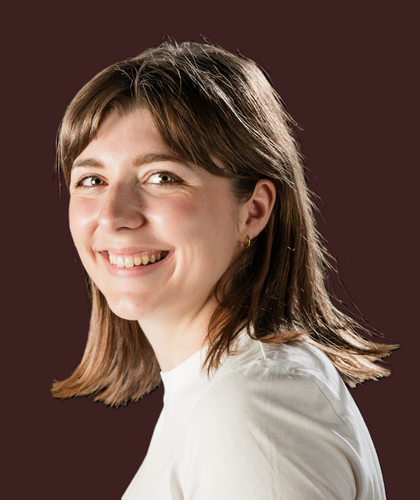
Femke Legroux is a PhD researcher in the Work & Organizational Psychology (WOPS) research group at Vrije Universiteit Brussel (VUB), Belgium, and is funded by the Research Foundation – Flanders (FWO). Her research explores the dynamics between job demands, job resources, and burnout over time, with a particular interest in individual differences and personalized approaches to understanding burnout. In addition to her research, she is also involved in teaching research methods.

Maura is a postdoctoral researcher at Ghent University in the research groups LIPLab and EXPLORA. Her research focuses on how we infer what other people are thinking, feeling, or perceiving, an ability often referred to as mentalizing. Besides research, she's passionate about open science and science communication.

Matilda is a postdoctoral researcher at KU Leuven in Brain and Cognition Research Unit. Her research involves using non-invasive brain stimulation to investigate cognition. Her research focuses primarily on transcranial magnetic stimulation (TMS) and vision, with special interest in visual categorisation. She obtained her PhD at The University of Queensland, Australia.

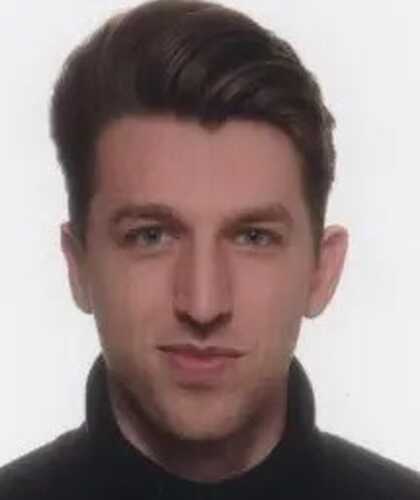
Robin is a doctoral researcher at KU Leuven’s Brain and Cognition Research Unit. His research focuses on how computational parameters underlying decision-making fluctuate over time. More specifically, he develops computational models to estimate these trial-to-trial fluctuations and investigates how they shape and help explain behavioral phenomena in decision-making.

Cloé Rose is a PhD student in Clinical Psychology at the University of Mons, in collaboration with Ghent University. Her PhD focuses on empathic accuracy (the extent to which partners accurately infer each other’s unspoken thoughts and feelings) within romantic relationships. Rather than viewing empathic accuracy as a stable ability, she studies it as the outcome of motivated processes. Through her work, she aims to clarify why partners sometimes seek and sometimes avoid accurate understanding, with the broader goal of informing interventions that support couples’ relational functioning and well-being.

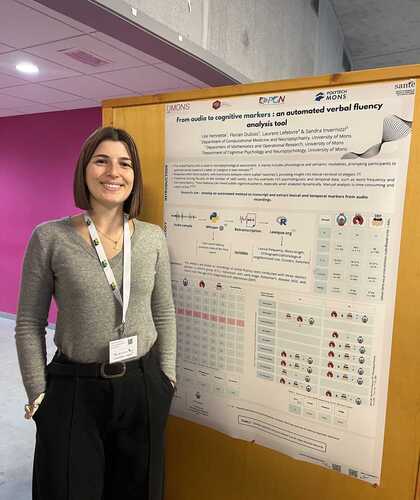
Léa Henriette is pursuing a PhD in the lab of Computational Medicine and Neuropsychiatry at the University of Mons (UMONS) in Belgium and is funded by the Center of Research of HELORA-UMONS. Her work focuses on better understanding the cognitive difficulties that people with cancer can experience, more particularly in breast cancer.

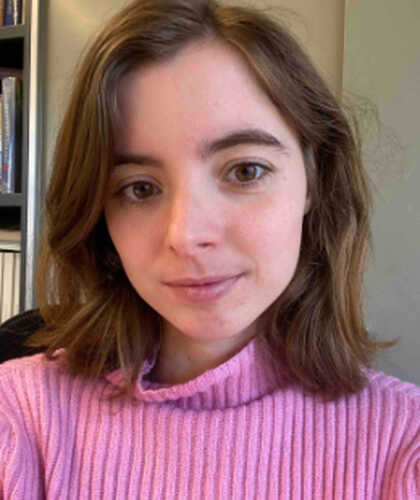
Lyse Gathoye is a PhD student at the University of Liège. Her research falls within cognitive psychology and focuses on autobiographical memory, specifically on memories whose reality has been challenged. Her aim is to deepen our understanding of these challenged memories along three main dimensions: (1) characterising them by examining their phenomenological and narrative aspects; (2) identifying the factors that determine whether belief in their veracity is maintained or modified; (3) understanding how these memories evolve once they have been challenged. To this end, she employs experimental, quantitative, and qualitative methods, leveraging their complementarity to conduct an in-depth investigation of this phenomenon.

Federico is a postdoc whose work focuses on neural alignment between interacting individuals and the signal processing of physiological and neural signals.

Sofía has a master’s degree in Theoretical and Experimental Psychology and in Statistical Data Analysis. In 2024 she started her PhD under the joint supervision of Prof. Emilie Caspar (M&SB lab, UGent) and Prof. Alison Mary (UR2NF, ULB). Her project focusses on the cognitive effects of exposure to an armed conflict, specifically she works with populations affected by the Colombian Internal Armed Conflict. In her work she combines psychological and neuroscientific measures to address the gap in research on PTSD and trauma exposure in non-WEIRD populations, and bring more depth to the dialogue of trauma in conflict zones
Doctoral students at UGent, Vrije Universiteit Brussel, Université Libre de Bruxelles, UCLouvain, University of Liège who become a member of the BAPS Junior Board can receive credits for this activity from their doctoral school. Please consult the doctoral school of your university for more information.